Showing posts with label postmodern fiction. Show all posts

David Mitchell's Cloud Altas


In Cloud Atlas, David Mitchell tells the six interrelated stories, each with a distinct voice and style, using a symmetric structure: 1-2-3-4-5-6-5-4-3-2-1.

The Pacific Journal Adam Ewing, as the title implies, is a journal of the protagonist’s adventure in the Pacific. Reading the story is like reading one of Joseph Conrad’s stories, with the European colonists dominating over the natives. Dr. Goose, Rev. Horrox and the first mate Boerhaave, epitomes of greed and callousness and the sense of entitlement, could be villains from The Heart of Darkness or Lord Jim.

The Pacific Journal Adam Ewing

Letters from Zedelghem is an epistolary about Robert Frobisher’s coming of age, and he could be one of Stendhal or Flaubert’s protagonists, charming his way through life until he meets his match.

Letters from Zedelghem

Half-Lives: The First Luisa Rey Mystery is a mystery written in multiple third-person POV and it is a John Grisham style thriller about a reporter stumbling into documents that reveal a nuclear plant’s safety issues. The company’s executives would do anything to conceal the problems. The hunger for energy drives the greed and ruthlessness of these executives. The Pelican Brief comes to mind.

Half-Lives: The First Luisa Rey Mystery

The Ghastly Ordeal of Timothy Cavendish written in a first-person POV is a humorous account of the title character’s adventure in a retirement home, a twist on One Flew Over the Cuckoo’s Nest. Only through such an ordeal could this callous and cynical publisher learn to appreciate life.

The Ghastly Ordeal of Timothy Cavendish

The Orison of Somni-451 is a sci-fi about a fabricant server’s rise to self-awareness. The interview between the Archivist and Somni-451 reveals the sickness of the consumer-oriented society and the encroachment of technocracy. Reminiscent of A Brave New World and Oryx and Crake.

The Orison of Somni-451

Sloosha’s Crossin’ an’ Ev’rythin’ After is a first-person POV dystopian tale of survival in Hawaii. Humanity comes full circle from savagery to civilization back to savagery, as if, after Nea So Copros, society could only descend into barbarism. Again Oryx and Crake comes to mind.

Sloosha’s Crossin’ an’ Ev’rythin’ After

The six tales would just be interesting stories, if written by six writers, but David Mitchell manages to cross genres—from mystery to sci-fi and from historical fiction to literary fiction—and integrate the stories through common human predicaments into a teleological vision.

Cloud Atlas, more than great storytelling, is a postmodern study of text. In Sloosha’s Crossin’, an aged Zachry tells a yarn, where truth mixes with fiction, to a group of children. His son finds an orison which when warmed would create a hologram of Sonmi-451 telling her story, which is The Orison of Sonmi-451. And in Orison, Sonmi-451 watches a movie about a twenty-first century publisher called Timothy Cavendish. That movie is The Ghastly Ordeal of Timothy Cavendish. In Ghastly Ordeal, Timothy Cavendish receives from an author, the manuscript of Half-Lives: The First Luisa Rey Mystery. In Half-Lives, Luisa Rey comes across Sixsmith’s letters: Letters from Zedelghem. And finally, in Letters, Robert Frobisher finds Adam Ewing’s journals in the famous composer’s house. And so, we go from yarn to stored data, to cinema, to novel, to letters, to journal—a journey through various communication media. In the spirit of Italo Calvino and other postmodern writers, Mitchell creates several levels of texts, and thus various levels of fiction. Since the aged Zachry is an unreliable narrator, we would question his yarn’s truth, as his son was doing so. The orison as stored data recounts an earlier historical period and might be true. Or is it, given the story of Orison is a setup to manipulate Sonmi-451? The movie The Ghastly Ordeal of Timothy Cavendish is fiction within fiction but since it is based on the life of the title character, the story may be true within Somni-451’s world. Half-Lives, Letters, and Pacific Journal are various levels of fiction within the novel Cloud Atlas.


Cloud Atlas is a modern masterpiece where the aesthetic form matches the intriguing stories. And the reader will continue to reflect on the human condition long after she has finished the book.

I saw the movie starring Tom Hanks and Halle Berry around the same time I read the novel and I prefer latter over the former. The movie, which changed various stories’ endings, destroyed the beauty of the novel. I recommend reading the book rather then seeing the movie.

Samuel Beckett’s Molloy, Malone Dies, The Unnamable

In his trilogy, Molloy, Malone Dies, The Unnamable, Samuel Beckett explores the frailty of existence.

In the first novel, the unreliable narrator recounts his decline but through the monologue, the reader learns not so much his past as declining state of mind. From his phrases and sentences, we realize how far he has departed from reality and how little we can trust his words. And even Molloy couldn't trust his recollection of events and his perception of world. In the second part of the first novel, the narrator Moran, a private detective searching for Molloy, follows a similar decline into delusion and his world becomes as unreal as Molloy's. As if they are the same person.

In Malone Dies, an old man confined to an asylum recounts his story and that of a boy named Sapo. But here, as in Molloy, the unreliable narrator conveys not so much the events as his delusion and decline. And we see Malone's death on the last page of the novel through the paragraphs and sentences distorting into fragments to reflect the narrator's last thoughts.

Samuel Beckett

“Lemuel is in charge, he raises his hatchet on which the blood will never dry, but not to hit anyone, he will not hit anyone, he will not hit anyone any more, he will not touch anyone any more, either with it or with it or with it or with or
or with it or with his hammer or with his stick or with his fist or in thought in dream I mean never he will never
or with his pencil or with his stick or
or light light I mean
never there he will never
never anything
there
any more ” from Samuel Beckett's Malone Dies.

Beckett's Birthplace: Foxrock, Ireland (Photo by Sarah777)

In The Unnamable, the narrator asks " What am I to do, what shall I do, what should I do, in my situation, how proceed?" As if only a nameless person, perhaps a nonexistent person, can seek to act and to live. The narrator claims to have created Molloy, Malone and other characters in Samuel Beckett's novels, and like them, he also struggles to communicate reality and follows the same path toward non-existence.

Beckett's trilogy is a postmodern fiction, not a meta-fiction but a story where the plot collapses and character and, even more so, style dominates. Through the narrators' babbling and occasional insight, through the fragmented thoughts and distorted sentences, we learn about their psyche, isolated and delusional. And we realize Beckett is describing postmodern men and women.

A Short Review of @House of Leaves


At one level, @House of Leaves[1] reminds us of Nabokov’s Pale Fire[2], in this case commenting on a series of films The Navidson Record[3] rather than on a poem. However, Jorge Luis Borge’s footprints[4] tag the pages of this novel, critiking a fictitious text and footnoting with real and fictitious sources. It is fiction mirroring gnirorrim noitcif-non, with footnotes, Exhibits, Appendices and even an index.

To say that @House of Leaves is a postmodern[5] work doesn’t even begin to describe the how avant-garde this novel is. Yes, it is metafiction, with Zampanò critiking The Navidson Record but within this critik are multiple levels of footnotes: Zampanò’s of course, but also Johnny Truant’s about Zampanò’s work and his (Johnny’s) life as well as those of the “editors,” which comments on both Zampanò and Truant. Not to mention footnotes on footnotes. And yes, it is visual text: the world @house[7] in blue; text in various fonts; text being cross out like an edited manuscript; text inverted, slanted, mirrored, etc. Mark Danielewski, in writing this book, pulls out almost all the punches in experimental fiction.

Sample Page from Novel 1

However, he didn’t sacred story for format. The Navidson Record is gripping surrealist ho…or…roo…or[8] story. We rue for Navidson as he and his team journey into the malleable space of the @house and as he and Karen struggle with their relationship. We mourn the loss of his brother Tom and lament Navidson’s determination to enter alone into that dark hallway, his Moby Dick[10].  Navidson and Karen are characters who struggle with their dark souls and the @house is the symbol that reflects the darkness. The @house is one of the most memorable non-human characters in fiction. It is alive. It reflects the darkness of those who enter it. But also, it represents the force of nature: random, chaotic, and XXXXX[11].

Sample Page from Novel 2

At the meta-level, Johnny Truant’s story is also compelling. Though at first Truant seems like a shallow character, even in the beginning, we see in Truant’s prose a mixture of the lyrical and the crude, which foreshadows his schizophrenia. The Whalestoe Letters, letter from his mother, reveal her troubled mind and also hinted at his. In those letters, Danielewski uses layout and format to show her descend into insanity. Likewise, the chrolonogy mentfraged in entries lanruoj Truant’s woshs mind his oozing ouch with time/emit.
@House of Leaves is a modern master…master…piece. If… if… you like Borges… Borges… you… you will… will… love… love… love… le…[12]*

* Since Blogspot does not support all the formats in the manuscript, we have attached Exhibits I and II to show the original review. –Ed. 

-----------------------------------------------------------------------------------------------------------
1. Danielewski, Mark, @House of Leaves (MM). Pantheon Books, New York.
2. Nabokov, Vladimir, Pale Fire (MCMLXII). G. P. Putnam’s Sons, New York.
3. See @House of Leaves by Zampanò with introduction and notes by Johnny Truant for a better understanding of this film series.
4. See Leonard Seet’s review of Jorge Luis Borges’s Labyrinth.
5. By postmodern, we mean the rebellion against pre-modernism’s reliance on authority whether they be gods or priests or kings or feudal lords, and modernism’s worship of the individual, reason and science.[6]
6. We have EDITED Leonard Seet’s spiel on postmodernism, which spanned six pages and twenty-eight lines. There have been enough arguments about what we mean by postmodern, just as there were enough bickering about PARA-digm sh-----ift, that we can lay them to ZZZZ for now. –Ed.
7. We have not checked whether anyone has claimed this hashtag in Twitter. –Ed.
8. For an analysis of how Navidson exploited the techniks of horror in film, see The Navidson Record.[9]
9. We believe this is an error. Disclaimer: we do not endorse self-referential loop in logical discourse. That is not to say we dismiss M. C. Escher’s drawings such as Relativity and Drawing Hands, for art is different from yada yada. -Ed.
10. The whale, not the restaurant chain.
11. We have EDITED out the word to comply with Blogspot’s censor on reviews. –Ed.
12. Apparently, time began to dilate while Mr. Seet was finishing his review, just as the space expanded when Navidson entered the hallway. And as @House of Leaves has affected reviewers, so it also has affected our spa… ace… tim… me… cont… tin… nu… u… u… –Ed.

Exhibit I: Original Review Page 1

Exhibit II: Original Review Page 2


Jorge Luis Borges's Labyrinths

Jorge Luis Borges, one of the most imaginative writers I have come across, could have been a mathematician, a physicist, a philosopher or a theologian. I can see his influence on Umberto Eco in the manipulation of text and the blending between fiction and reality. To read Borges’s Labyrinth is immerse myself in a magical world where the concept of infinity manifests in space and time, where the boundary between dream and reality fades, where the past and the future converge into an instant, where levels of texts superimpose on one another, where fiction imitates nonfiction and life is a drama on stage. To read Borges is to become children again, listening to stories of magic and wonder, of unfathomable worlds.


In “Tlön, Uqbar, Orbis Tertius,” Borges creates a fictional world, where Berkeleyan idealism dominates its inhabitant’s thinking. “The world for them is not a concourse of objects in space; it is a heterogeneous series of independent acts.” Through the narrator Borges, we encounter a language without nouns, but with “personal verbs, modified by monosyllabic suffixes (or prefixes) with an adverbial value.” The author Borges has created an alternative world, where the language and the worldviews differ from our world and from it we learn of our biases and blind spots. And we can begin to imagine new worlds, new possibilities. We can create our own languages, as Tolkien has in his fiction, and as software engineers has BASIC, FORTRAN, PASCAL, and so forth. We see similar blending of fact and fiction in Umberto Eco’s The Prague Cemetery.


In “The Garden of Forking Paths,” we encounter an infinitely long book where at every juncture of the story, all possibilities are written and the branches grow exponentially. “In all fictional works, each time a man is confronted with several alternatives, he chooses one and eliminates the others; in the fiction of Ts’ui Pen, he chooses—simultaneously—all of them. He creates, in this way, diverse futures, diverse times which themselves also proliferate and fork.” When I was younger, I have read stories where the reader can choose one of several actions—the decision tree—and turn to the appropriate page for that choice. The story continues from there until there is another choice. And the story would have several endings. After reading this story, I realize where the idea came from. Perhaps, Borges read about the many world interpretation of Heisenberg’s Uncertainty Principle, which states that before an observation, a system could be in various states—position, momentum, time, energy—according to a probability distribution and only when someone has observed the system—photons bouncing off the object—would it collapsed into a single state. In science fiction, such as Star Trek, we read about parallel universes but this may be the first story with such a concept.

In “The Library of Babel,” Borges again plays around with the concept of infinity, but this time also with combinatorics and I can imagine Borges as a mathematician or computer scientist. A labyrinth of infinite number of rooms stores books that include all combinations of a 22-letter alphabet plus spaces and the comma and period. Since we know the number of characters in each book, we can calculate the number of possible books (not infinite). Of course, most of them are meaningless. Is this universe of repeated rooms each with five shelves and thirty-five books a mirror of our world? Interestingly, in Eco’s The Name of the Rose, the blind monk who oversees the library is named Jorge of Burgos.

I have heard of the argument that Judas betrayed Jesus to force the latter to reveal his divinity and complete God’s work, but in “Three Versions of Judas,” the controversial theologian reinterprets the Biblical text and declares Judas the savior and God’s incarnation. “To save us, He could have chosen any of the destinies which make up the complex web of history; He could have been Alexander or Pythagoras or Rurik or Jesus; He chose the vilest destiny of all: He was Judas.” Borges’s fascination with text, whether historical documents or his own creation, dominates much of his stories and Eco certainly inherits that fascination.

In “The Circular Ruins” where a man is only another’s dream figment and “The Theme of the Traitor and the Hero” where a man’s execution for betrayal is part of a drama, Borges again mixes fact with fiction to create worlds as ephemeral as mist.


I recommend Labyrinths to anyone who wants to dream of magical worlds, who wants to reflect on reality and fiction, who wants to analyze the boundary between text and the interpreter, and who wants to contemplate on the nature of infinity.

Prague Cemetery: Umberto Eco's Postmodern Narrative

Simonini is a forger who helps the secret services of Piedmont, France, Prussia and Russia implicate the Carbonari, the Republicans, the Freemasons, the Jesuits, and the Jews and his allegiance is only to the paycheck. He travels with Garibaldi as the general defeats the Kingdom of Two Sicilies and unifies Italy. He helps the French and Prussian spy on each other before the Franco-Prussian War. He forges the document that implicated Dreyfus in the famous affair. But his masterpiece is The Protocols of the Elders of Zion, detailing the Jewish leaders’ plot in a Prague cemetery to take over the world by amassing wealth and destroying “Christian” principles.

He travels with Garibaldi as the general defeats the Kingdom of Two Sicilies and unifies Italy.

He forges the document that implicated Dreyfus in the famous affair.

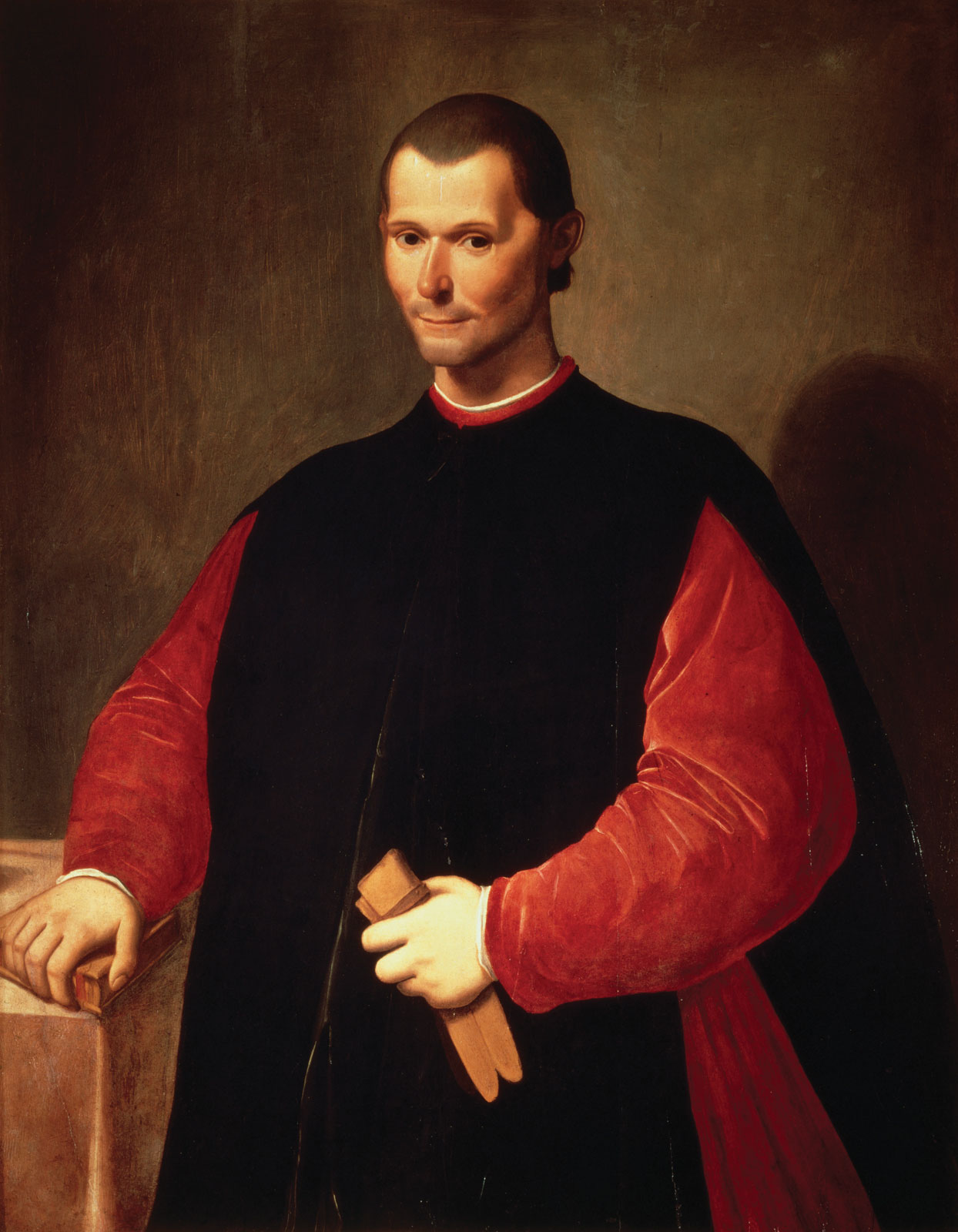
Umberto Eco interleaves European history with Simonini’s exploits and integrates the Freemasons, the Jesuits, and the Jews in multiple conspiracies against each other. Political maneuverings that Machiavelli would applaud. But it is in manipulating the text into a multi-level narrative that Eco shows his genius.

But his masterpiece is The Protocols of the Elders of Zion.

Umberto Eco interleaves European history with Simonini’s exploits.

At the first level are Simonini’s forged documents, including the letter Dreyfus wanted to send to the Germans and The Protocols of the Elders of Zion, which the protagonist knows to be fake and which we the readers believe to be so. At the second level are Simonini’s journal entries—including the fake Dalla Piccola’s writings—which our protagonist believes to be true (the diary describing how he had forged them) and which we the readers know is fiction (Eco’s novel) but aren’t sure whether our hero accurately recorded his exploits. At the third level are the Narrator’s comments throughout the novel to complement the diary and fill in the missing events, as a record of Simonini’s exploits. We the readers don’t know who the Narrator is and can only trust his/her account.  But in the section “Useless Learned Explanations” the Narrator outlines the novel and reveals that all the characters beside Simonini are real people. And he/she even provides notes that reveal Hitler read The Protocols of the Elders of Zion. At first, we the readers might believe these to be the author’s notes, but then we realize the Narrator is commenting on these events (Simonini’s narrative) as a historian and the comments are part of the novel.

Political maneuverings that Machiavelli would applaud.

A truly postmodern narrative, in the spirit of Jorge Luis Borges’s Ficciones, where each layer of narrative comments on a lower one until the reader questions the boundary between fact and fiction.

A truly postmodern narrative.