Showing posts with label historical novel. Show all posts

Thoughts on Irvin Yalom’s The Spinoza Problem


Spinoza


In The Spinoza Problem, Irvin Yalom contrasts the courage and confidence of Spinoza with the insecurity and pettiness of Alfred Rosenberg. Spinoza’s curiosity took him beyond his cultural and customs, and even his community when he was ex-communicated. Yet, his freedom to think his own thoughts brought him joy unspeakable. On the other hand, Rosenberg, through he sought to create a ideology of the master race, of which he was a member, his emotions rose and falls through others’ view of him. In particular, he sought the approval and praise of Hitler, but the latter only used him and never respected him. And members of Hitler’s inner circle shunned and scorned Rosenberg. Both Spinoza and Rosenberg left their marks in history, one leading latter generations to rise above superstition and muddled thinking, the other contributing to the death of millions. History can judge them by the fruits they bore. 


The Nuremberg Trial


Ernest Hemingway's FOR WHOM THE BELL TOLLS


Ernest Hemingway's FOR WHOM THE BELL TOLLS is not only a war novel but also a story of life, love, lost and ultimately death. Robert Jordan lives to fight with the republican guerrillas and he dies fighting alongside them. He lived a life that meant more to him than living in American suburbia with his wife and two children and a dog, working a nine-to-five job. That wouldn't be Robert Jordan, or Ernest Hemingway.

Sierra Guadarrama

Hemingway's minimalist writing reflects the pristine snow trails and pine forests, which reflect loneliness and death but also love and hope. Like a full moon reflected in a still lake. A poetry of war and camaraderie, where the violence of the writing would only temper the tragedy of lost. To experience these feelings is to experience the beauty of Hemingway's writing. For a war novel, there aren't many battle scenes. But we get to feel Robert Jordan's subdued emotions against the violence of war. The power of his love for Maria is that it couldn't be consummated. In the end, he chooses the only path consistent with his other choices: to fight to the end and risk capture and torture rather than have his comrades shoot him.

Ernest Hemingway

Kasuo Ishiguro’s The Buried Giant


Kasuo Ishiguro’s writing is magic. I usually don’t read fantasy fiction, but by creating a mesmerizing dreamscape, he turns a dragon-slaying tale into a contemplation of memory and the nature of humanity. Is the loss of memory the only way to avoid retaliation and vengeance? If we don’t forget, can we ever forgive? Furthermore, the elderly couple as unlikely protagonists in a fantasy story gives to the story repose and warmth that younger heroes couldn’t. Read The Buried Giant for the love between the protagonists. Read it for Ishiguro’s prose, which matches the dreamy milieu.


Umberto Eco's Foucault's Pendulum

Casaubon, Belbo and Diotellevi become bore with reading occultist manuscripts, and decided to connect various documents to create the Plan, a Knights Templar conspiracy to take over the world. According to the Plan, the Templars have found the Telluric Current’s source, the center of earth’s energy, and they partitioned a map of its location into six pieces. When placed under Foucault’s Pendulum in Paris’s Conservatory at a specific time, the intersection of the pendulum’s arc and a light beam would reveal the location.


When Belbo disappears and then calls Casaubon for help, the latter realizes the Diabolicals believed in the Plan and kidnapped his friend to find the map. As he searches for his friend, he learns about Belbo was obsessed with a magical moment during his childhood and wanted to relive it helping to create the Plan.

Foucault's Pendulum in Paris

In Foucault’s Pendulum, “the thinking man’s DaVinci Code,” the three friends remake history by manipulating texts and Eco satirizes the search for knowledge through historical documents. In his manipulating and interpreting historical texts, we can see Jorge Luis Borges’s influence, particularly his short story "Tlön, Uqbar, Orbis Tertius." In this novel, Eco sows the seeds for his later novel The Prague Cemetery, where Simonini forges “historical documents,” particularly the Protocols of the Elders of Zion. To read Foucault’s Pendulum is to journey into the occultist society and to understand the how unreliable historical texts may be.

Foucault’s Pendulum is an Indiana Jones adventure without the snake pits, rolling stones, or Nazi treasure hunters, but with plenty of secret societies and conspiracies. I recommend this novel for the intellectual thrill and for the reflection on how we understand the past through historical documents.

Prague Cemetery: Umberto Eco's Postmodern Narrative

Simonini is a forger who helps the secret services of Piedmont, France, Prussia and Russia implicate the Carbonari, the Republicans, the Freemasons, the Jesuits, and the Jews and his allegiance is only to the paycheck. He travels with Garibaldi as the general defeats the Kingdom of Two Sicilies and unifies Italy. He helps the French and Prussian spy on each other before the Franco-Prussian War. He forges the document that implicated Dreyfus in the famous affair. But his masterpiece is The Protocols of the Elders of Zion, detailing the Jewish leaders’ plot in a Prague cemetery to take over the world by amassing wealth and destroying “Christian” principles.

He travels with Garibaldi as the general defeats the Kingdom of Two Sicilies and unifies Italy.

He forges the document that implicated Dreyfus in the famous affair.

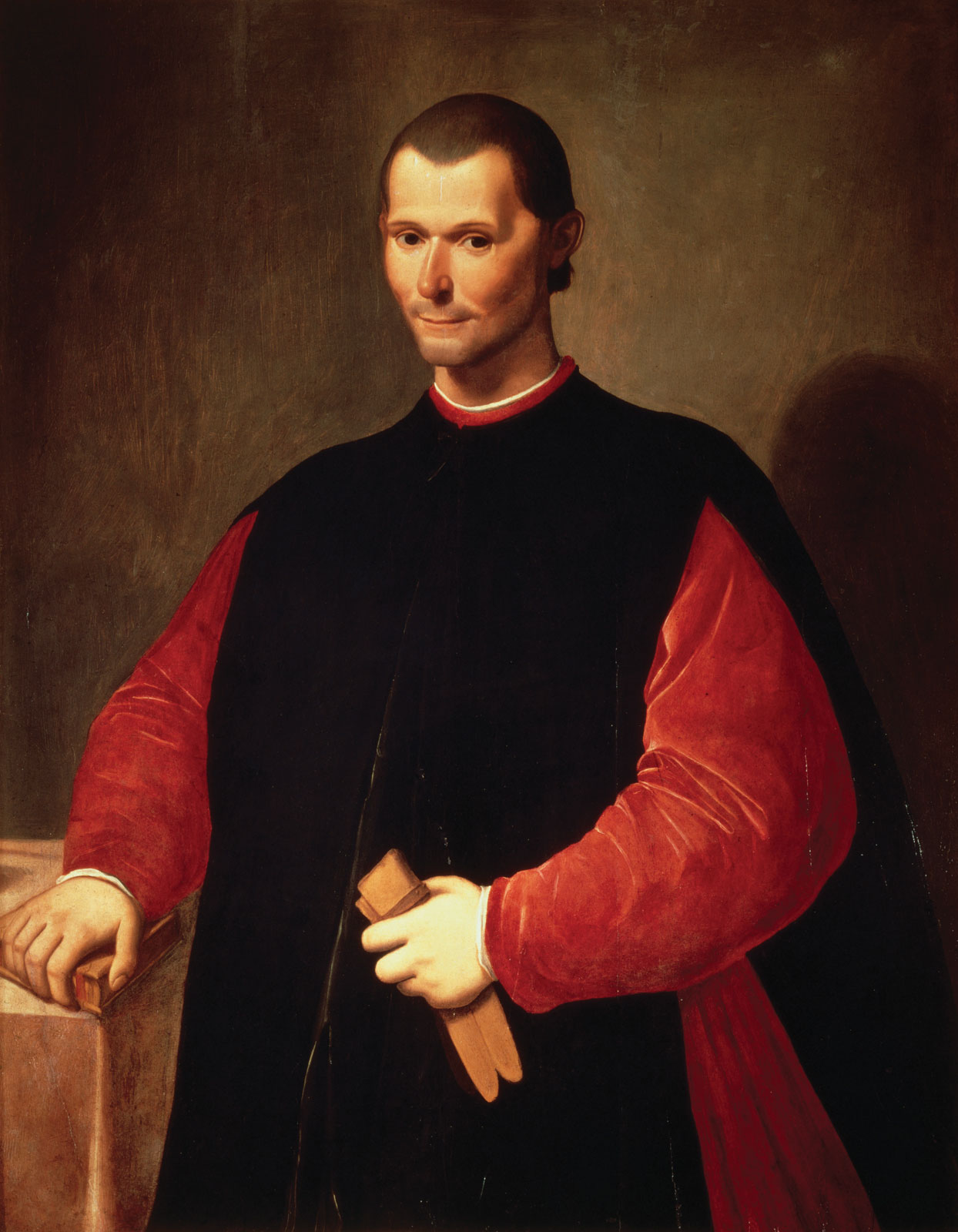
Umberto Eco interleaves European history with Simonini’s exploits and integrates the Freemasons, the Jesuits, and the Jews in multiple conspiracies against each other. Political maneuverings that Machiavelli would applaud. But it is in manipulating the text into a multi-level narrative that Eco shows his genius.

But his masterpiece is The Protocols of the Elders of Zion.

Umberto Eco interleaves European history with Simonini’s exploits.

At the first level are Simonini’s forged documents, including the letter Dreyfus wanted to send to the Germans and The Protocols of the Elders of Zion, which the protagonist knows to be fake and which we the readers believe to be so. At the second level are Simonini’s journal entries—including the fake Dalla Piccola’s writings—which our protagonist believes to be true (the diary describing how he had forged them) and which we the readers know is fiction (Eco’s novel) but aren’t sure whether our hero accurately recorded his exploits. At the third level are the Narrator’s comments throughout the novel to complement the diary and fill in the missing events, as a record of Simonini’s exploits. We the readers don’t know who the Narrator is and can only trust his/her account.  But in the section “Useless Learned Explanations” the Narrator outlines the novel and reveals that all the characters beside Simonini are real people. And he/she even provides notes that reveal Hitler read The Protocols of the Elders of Zion. At first, we the readers might believe these to be the author’s notes, but then we realize the Narrator is commenting on these events (Simonini’s narrative) as a historian and the comments are part of the novel.

Political maneuverings that Machiavelli would applaud.

A truly postmodern narrative, in the spirit of Jorge Luis Borges’s Ficciones, where each layer of narrative comments on a lower one until the reader questions the boundary between fact and fiction.

A truly postmodern narrative.